Looking for an alternative to Revolut?
Revolut Business and Spendesk both help businesses manage payments and expenses, but they have different priorities. Revolut Business combines a business bank account with financial services and spend tools. Spendesk is a dedicated spend management platform for finance teams, providing control and visibility across cards, expenses, invoices and procurement. The right choice depends on whether your business needs an all-in-one banking solution or a dedicated platform to manage and control company spend.
)
TRUSTED BY THOUSANDS OF FINANCE TEAMS AND EMPLOYEES!


Credible enough for finance.
Practical enough for the business.
That matters because the best finance process is not just controlled. It is actually used.


















How Spendesk compares with Revolut

Key differences between Spendesk and Revolut
The key difference is where each platform starts. Revolut Business brings banking, international payments and financial services together, with tools to help businesses manage spend. Spendesk is built around the needs of finance teams, helping them oversee cards, expenses, invoices and procurement from one dedicated platform. The right fit depends on whether banking or spend control sits at the heart of your organisation’s needs.

Business banking vs. spend management
Revolut Business provides business accounts, multi-currency wallets, and international payments, with basic expense tools layered on top. Spendesk is not a bank — it is a dedicated spend management platform that gives finance teams granular control over how money leaves the organisation across cards, expenses, invoices, and purchase orders.
Approval workflows
Spendesk includes fully configurable multi-step approval workflows across all spend types — cards, expenses, and invoices — as part of its core product. Revolut Business offers basic approval flows but without the same depth of customisation across spend categories and cost centres.
Accounts payable
Spendesk's AP module covers the full invoice lifecycle: AI-powered data extraction, automated coding, purchase order matching, and a centralised view of all invoices including those paid externally. Revolut Business does not offer comparable AP depth.
Accounting integrations
Spendesk connects natively with DATEV, Pennylane, Xero, Exact Online, NetSuite, and QuickBooks, with bidirectional sync, analytical dimensions, and VAT codes. Revolut Business integrates with Xero but with more limited depth across other ERPs.
Bottom line
If your business primarily needs a multi-currency business bank account with light expense tools, Revolut Business is a strong fit. If your finance team needs a dedicated platform to control, approve, and reconcile all company spend with full AP, procurement depth, and local accounting integrations, it is worth evaluating both in detail.
Spendesk vs Revolut pricing
Revolut's pricing model
Revolut Business plans start from free (Basic) up to a custom Enterprise tier. The Titan Business Card, launched in December 2025, is priced at £65/user/month and includes expense tracking and receipt matching alongside personal perks (airport lounge access, RevPoints). Per-user pricing scales with headcount, making costs less predictable as teams grow. Virtual cards are also capped at 50 per person — unlike Spendesk, which offers unlimited virtual cards including single-use ones.
Spendesk's pricing model
Spendesk pricing is agreed per company based on team size, modules activated, and scale — without a per-invoice charge for accounts payable processing. Contact the Spendesk team for a quote tailored to your organisation.
What to consider when comparing costs
Factor in: the number of users who will need platform access, whether per-user card fees apply, the depth of spend controls and AP features included in the base plan, and whether the platform covers your full finance workflow or whether gaps will require additional tools.
Which should I choose: Spendesk or Revolut?
Spendesk may be better suited to you if:
Your finance team needs granular approval workflows across cards, expenses, and invoices: all in one platform
You manage purchase orders, supplier invoices, and need a centralised AP view including invoices paid externally
You need native accounting integrations with depth across DATEV, Pennylane, Xero, and Exact Online
You operate across multiple legal entities and need consolidated reporting and entity-level spend controls
Revolut may be better suited to you if:
You primarily need a multi-currency business bank account with international payment capabilities
You want personal employee perks (lounge access, RevPoints) bundled with your business card
You are a small business or freelancer that needs basic banking and light expense tracking in one app
Information is based on publicly available Spendesk and Revolut product features as of September 2026.
We’re no longer ‘the bad guys from finance’. We used to always be the people complaining, nagging about missing receipts or unnecessary payments. But now we're the heroes.

Control spend before it happens
Hands-on implementation support, dedicated customer success, and a team that helps you launch fast and scale smoothly. We've onboarded thousands of European finance teams in weeks, not months, and we know how to adapt to any kind of complexity.
100%
Visibility on all purchase requests, from submission to approval
80%
Less back and forth with automated workflows and approvals
50%
Faster procurement cycles from vendor onboarding to payment
All in one tool
Spendesk is more than a current account. The tool combines smart payment methods with software for centralised invoice and expense management. Real-time reporting and direct exports to your accounting software are also fast and easy.

Approval and policies

Team budgets

Invoice payment

Expense tracking

Virtual & physical cards

Spending reports

Pre-accounting automation
Make a seamless transition
Switching spend management platforms shouldn't hold you back. We're here to make the move simple, fast, and painless.
Dedicated onboarding and implementation support
Your dedicated Onboarding Manager works with you to define your timeline and guides you through every step, from initial setup to go-live. Typical onboarding takes 1 to 3 weeks, depending on your requirements.
Multilingual, in-house support team
Get help from our multilingual, in-house experts via live chat and email. With a median response time of 5 minutes, instant support is always just a message away.
)
Built for European finance teams
Spendesk has been built for European finance teams since 2016: as a profitable French unicorn and ACPR-licensed Payment Institution operating across all 30 EEA countries. More than 5,000 European companies rely on Spendesk to manage their spend, with €10 billion processed across France, Germany, the UK, Spain and beyond.
From France's e-invoicing mandate to the UK's Making Tax Digital, Spendesk is designed to meet the compliance, VAT, and accounting requirements of each market it operates in. ISO 27001:2022 certified, DORA compliant, and a certified Peppol Access Point, with native integrations for DATEV, Xero, Sage 100, NetSuite, Exact Online and more.
)
Even more reasons you’ll love Spendesk
Don't just track cards. Control complete spend, with a platform built for finance teams, not just card users.

Stop chasing receipts
Play By The Rules automates receipt collection with 98% capture rates. No more manual follow-ups or missing documentation at month-end.

Drive efficiency
Spendesk uses AI to predict cost centres, expense categories and analytical fields automatically. With Spendesk AI Connect, finance teams can query their spend data directly from their AI assistant — from approval to reconciliation.

Complete spend visibility
See all current and upcoming spend across every entity and department in real time, with dedicated multi-entity dashboards.

Budget ownership
Give teams budgets they can own while finance oversees everything, with automatic tracking and intelligent guardrails that prevent overspend.

Reimburse travel
Reimburse employees directly through Spendesk, with full visibility and compliance built in.

Office management
Capture regular and one-off purchases with smart controls that keep office spend within budget.
Clearer approval workflows and stronger policy controls
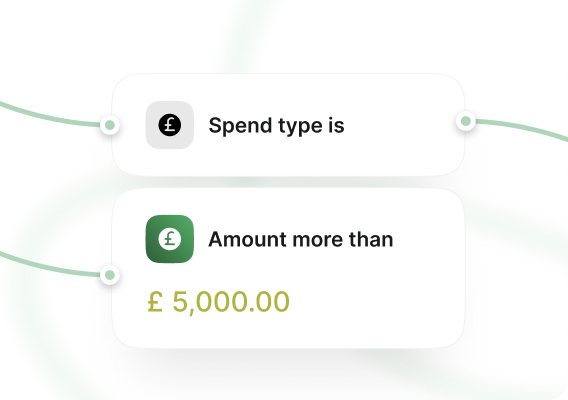
UK compliance with less manual work
Set rules once and Spendesk enforces them automatically — blocking out-of-policy spend before it happens, not after.
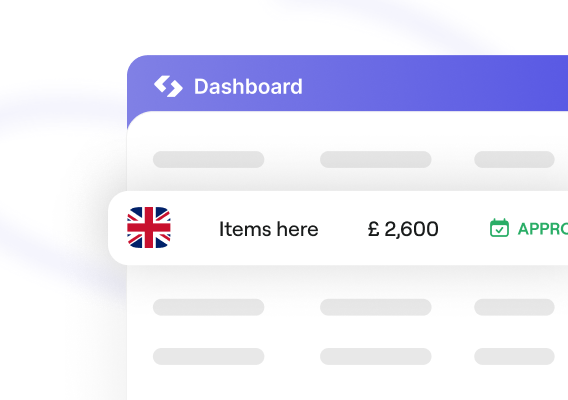
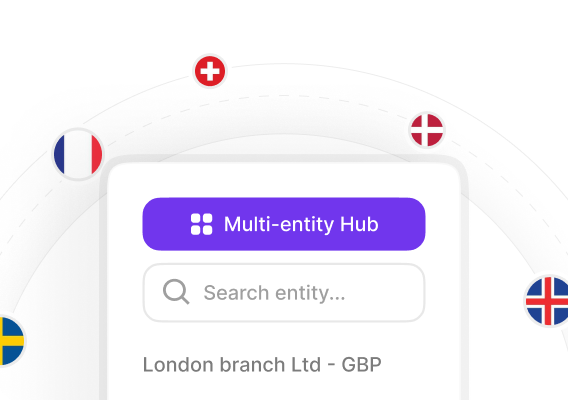
Multi-entity operations across Europe
Spendesk handles multi-entity operations across currencies and countries in one centralised platform — with consolidated reporting and entity-level spend controls, no manual reconciliation required.
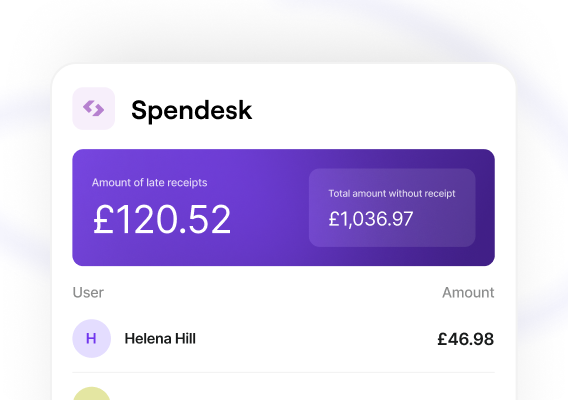
A complete spend operating model
Spendesk covers cards, expenses, approvals and procurement in one platform — replacing reactive clean-up with proactive spend oversight, across every team and entity.
Revolut — FAQ
The most frequently asked questions about Spendesk & Revolut.
Spendesk provides a complete expense management platform with physical and virtual company cards, automated receipt capture, pre-set budgets, and multi-level approval workflows. Spendesk's automated expense reporting and invoice management integrate with ERPs and accounting tools to centralize spend and enforce policy, while Revolut focuses primarily on banking and payments rather than end-to-end spend controls.
Spendesk supports corporate payments and card issuance with physical and virtual cards, per-card limits, real-time authorizations, and supplier payments. Spendesk's batch payment tools and automated reconciliation streamline accounts payable, enabling finance teams to issue cards for specific budgets and disable them instantly, replacing separate banking and manual payment workflows commonly used with Revolut business accounts.
Spendesk is not a bank but enables international payments and multi-currency virtual cards through partner banking rails, supporting supplier payments and expense charges in multiple currencies. Spendesk's centralized currency controls and reporting let finance teams track cross-border spend and reconcile transactions automatically with accounting integrations, reducing manual FX reconciliation work.
Spendesk enforces budgets and approvals with pre-set budget allocations, multi-level approval workflows, and card-level spend limits that block transactions exceeding policy. Spendesk's real-time controls and automated receipt matching speed up approvals, ensure policy compliance, and provide finance teams with live visibility into committed and actual spend for better forecasting.
Spendesk offers native integrations with QuickBooks, Xero, and NetSuite for automated reconciliation, one-click export of expense reports, and synced supplier bills. Spendesk's ledger mapping and exportable spend reports reduce manual posting, accelerate month-end close, and maintain audit trails that simplify compliance and accounting compared with siloed bank statements.
See how effortless spend control can be
Real-time tracking, automated alerts, and built-in controls that keep spending on budget without slowing teams down.